

Let’s begin here: it’s 28°C in Lima. The sun is blazing, the streets are buzzing, and yet — a giant inflatable snowman deflates slowly on the sidewalk next to a fully decorated pine tree. Children eat panettone beneath blinking icicle lights while their parents plan surfing trips for Christmas Day.
In other words: Christmas is weird down here.
And not in a “quirky holiday sweater” kind of way but in a “why are we still doing this?” kind of way. Because beneath the fuzzy nostalgia and cozy capitalist veneer, Christmas is still one of the clearest expressions of colonial cultural dominance the world has ever known.
Before Jesus Came to the Jungle
Before European colonization, there was no Christmas. No nativity scenes, no reindeer, no Jesus-in-a-manger narratives. Indigenous communities across the Global South had their own sacred seasonal rhythms. Solstice celebrations, fertility festivals, and rituals tied to land, moon cycles, and cosmos.
As Sanneh (2009) and Burkhart (1989) have written, Christian holidays like Christmas were strategic tools in the colonial project used to replace Indigenous cosmologies and install European religious narratives as the new sacred order. And with that came a shift in orientation. From the land to the cross, from Pachamama to the Virgin Mary, from ancestral reverence to imported salvation stories.
First they brought the cross. Then they brought the crown. Then they brought Coca-Cola.
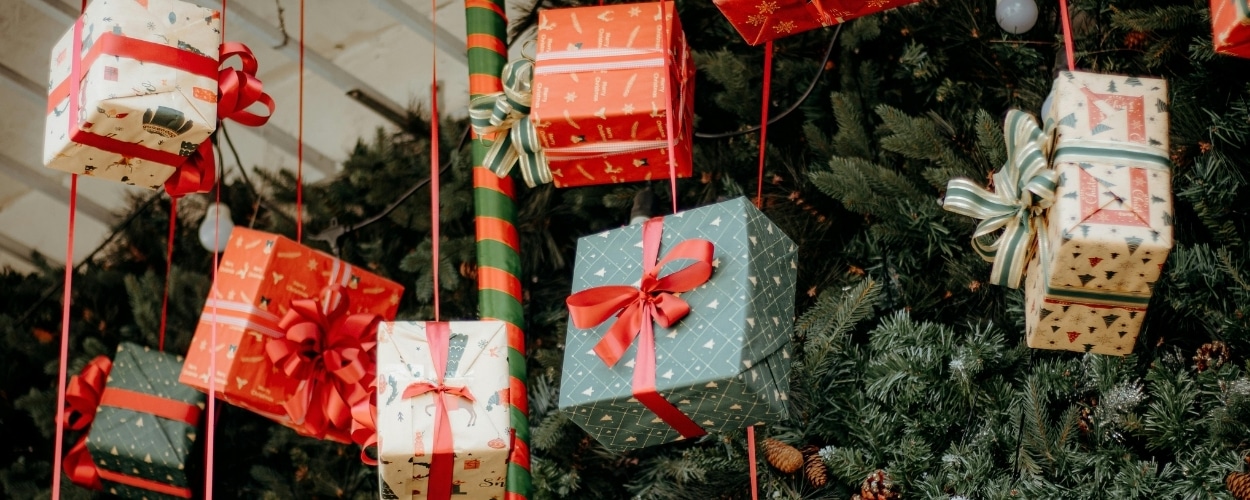
The image of Christmas most of us grew up with is built entirely on a Northern Hemisphere fantasy. Snow, chimneys, sleigh bells, mulled wine, fireplaces, and fuzzy socks.
It makes sense… if you’re in Germany. It makes none if you’re in Ghana, Peru, or Australia.
Yet even in the height of summer, we mimic the North.
Snowflakes in the tropics. Santa in the desert. Pine trees on beaches. It’s cultural cosplay and Gramsci would call it cultural hegemony: the normalization of one worldview as universal.
The entire South reoriented its rituals to match the North’s mythology. Instead of celebrating our own solar cycles, we ended up importing theirs.
In the Andes, December once marked the festival of Capac Raymi, the Inca summer solstice celebration honoring the Sun God, Inti, with rituals of purification, gratitude, and initiation into adulthood. Now? Most people are setting up inflatable Santas next to plastic nativity scenes, in 90°F heat. The irony is delicious and a little devastating.
Capitalism, Our Favorite Religion
Let’s not forget: Christmas is now primarily a capitalist holiday, not a religious one.
Even if you don’t believe in Jesus, you probably believe in free shipping.
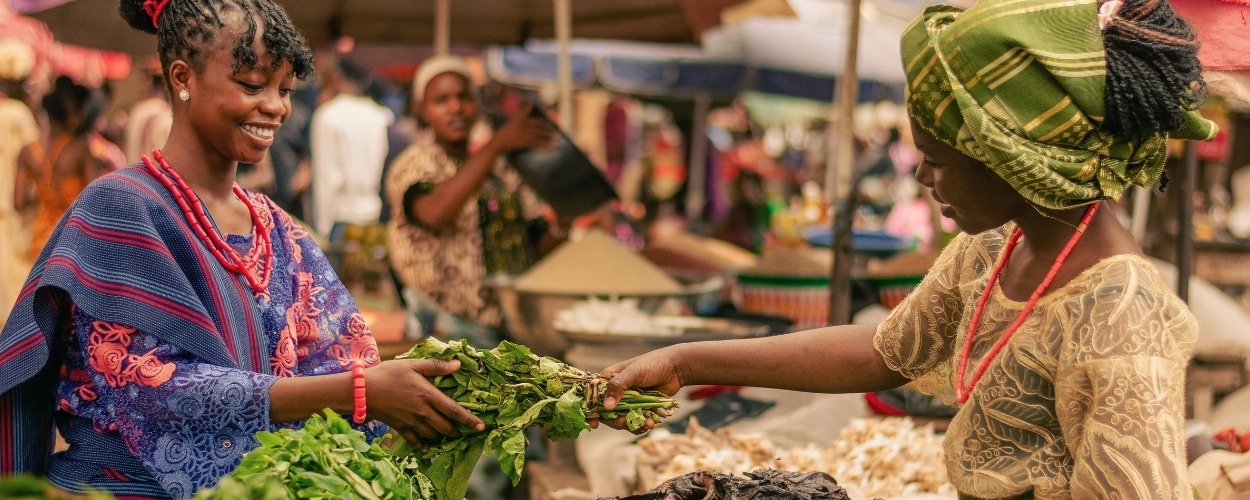
And this ritual of frenzied consumption? It’s global. As Belk (1993) notes, Christmas has become a “commercial rite” where the act of buying replaces the act of believing.
Coca-Cola, of course, helped lock in the global image of Santa as a jolly white man in red — a symbol now recognized in places that have never seen snow. The holiday has become an economic engine, timed perfectly to close out the fiscal year with a dopamine-spiked spending spree.
We’re not exchanging sacred gifts. We’re panicking on Etsy at 2 a.m.
We’re not sowing seeds of reflection. We’re ordering same-day delivery.
Displacement and Syncretism: What Was Lost
Some Indigenous communities resisted the holiday altogether. Others, recognizing that survival sometimes requires camouflage, adapted it — blending Catholic rituals with their own ceremonial frameworks in ways that preserved older cosmologies beneath the surface. Mexico’s Las Posadas, for example, is not simply a nine-day reenactment of Mary and Joseph’s search for lodging; it is also a continuation of pre-Hispanic procession rituals, with song, movement, and communal storytelling woven into Christian liturgy like an undercurrent of ancestral pageantry (Gruzinski, 2001). It is less an adoption than a quiet strategy of resistance.
But let’s not romanticize this too much. Most ancestral solstice ceremonies weren’t gently braided into Christmas; they were suppressed, mocked, banned, or overwritten. And what replaced them was not spiritually richer simply better funded, institutionally enforced, and backed by the global marketing department of empire.
Take the Andes. The Inca festival of Capac Raymi once lit up the December solstice with rituals of purification, cosmic renewal, and warachikuy, the initiation of youth into adulthood. It was a solar ceremony; a moment when community, cosmos, and identity aligned under the gaze of Inti, the Sun. Fire offerings, ceremonial bathing, and public rites connected people to the turning of the year in a way that was both celestial and embodied. Today, most of that world has been pushed to the periphery. Instead of sun altars, we have LED reindeer; instead of rites of passage, we have mall promotions; instead of the cosmic order of Inti, we have inflatable Santas drooping in the heat. Capac Raymi survives, yes, but mostly in folkloric fragments. Present, but rarely centered.
And the Andes are not alone. Across Mapuche territory in southern Chile and Argentina, communities once gathered for Nguillatún, a ceremony of reciprocal renewal with land and spirit. Through days of prayer, drumming, dance, and offerings to the ngen, the beings who guard rivers, forests, and winds, the Mapuche affirmed their covenant with the natural world. There is nothing in the Christmas catalogue that resembles this depth of ecological intimacy.
In the Amazon, December often ushers in the rainy season, a time of cleansing and spiritual potency. Among the Shipibo-Conibo, Asháninka, Huni Kuin, and many others, this was, and in many places still is, a moment of communal storytelling, plant-teacher ceremonies, and nights filled with icaros that align the human mind with the renewing pulse of the forest. The idea of performing a winter holiday in equatorial humidity would be laughable if it weren’t such a stark example of cultural displacement.
Across the Pacific, Aboriginal Australian nations read this same month through an entirely different cosmological grammar. For the Noongar people, Birak, the “first summer,” is a season marked by fire stewardship, kinship travel, and ceremonial songlines. Ritual here doesn’t revolve around an imported holy family — it revolves around the land’s own choreography.
In southern Africa, Zulu communities historically welcomed the solstice with Umkhosi Wokweshwama, the First Fruits Festival, offering gratitude to ancestors and to the Earth for the season’s first harvests. It was a ceremony of renewal, reciprocity, and embodied thanksgiving. A far cry from flashing sale banners and plastic wreaths.
And across what is now the United States and Canada, many Native Nations observed their own solstice ceremonies. The Hopi Soyal ceremony welcomed the return of the sun with prayer, masked dancers, and the rekindling of communal harmony. Navajo communities marked the solstice period with rituals honoring cosmic balance and the restoration of hózhǫ́, harmony and right relation. Along the Pacific Northwest coast, winter potlatches reaffirmed kinship, ancestral teachings, and systems of reciprocity so powerful that colonial governments outlawed them for decades. Imagine outlawing generosity because it threatened the economic order — an irony that practically writes itself.
None of these traditions were archaic. None were waiting for replacement. They were cosmologies intricate, embodied, ecologically literate ways of being in the world.
Yet under colonial rule, many of them were pushed into silence, folded into Christian calendars, or dismissed as superstition. A single imported holiday became the gravitational center of the season, flattening a planetary landscape of solstice celebrations into one snow-covered narrative that never belonged to the South in the first place.
Jesus, Santa, and the Colonial Gaze
There’s also the matter of race which we need to name.
The figure of Jesus Christ, as exported globally, is often whitewashed. Pale-skinned, blue-eyed, gentle and glowing. Santa Claus, similarly, is a bearded white man who travels the world giving gifts a symbolic savior with a credit card.
As Jennings (2010) and Tisby (2019) have pointed out, the Christian imagination in colonial contexts was racialized: whiteness was made synonymous with moral authority and divinity; Blackness and Indigeneity with sin, paganism, or savagery.
So yes, Christmas is not just religious and capitalist, it’s racialized too.
Its imagery reinforces a narrative of moral salvation arriving from the North, via a white man, in a robe or a sleigh.
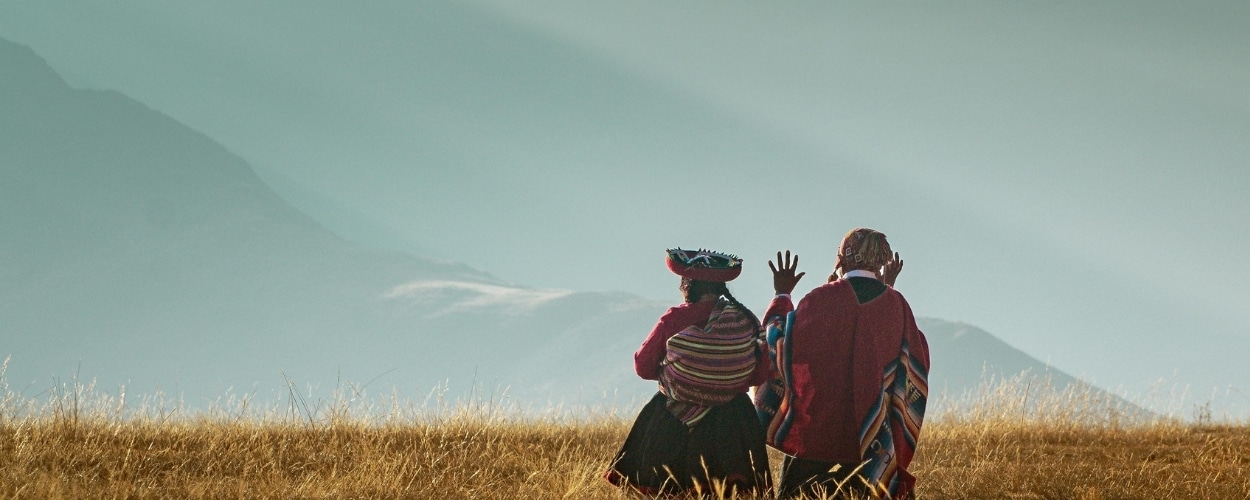
— With so many suns and seasons guiding us, the invitation now is not uniformity, but expansion — to let our celebrations grow wide enough to hold every land’s rhythm —

Rituals Matter. But Let’s Rethink Them.
This is not a takedown of celebration itself.
Creating ritual is human. Marking the passage of time is sacred. Gathering with loved ones is vital.
But how we do it matters.
Let’s ask:
What would a decolonial holiday season look like?
What would happen if we celebrated Capac Raymi instead of Christmas?
What would it mean to give time, presence, and story instead of products?
Because the real issue isn’t just snowmen in the sun. It’s that our rituals have been replaced with routines — and our reverence with receipts. So this year, let’s light candles for what was lost, and what still survives. Let’s read the land instead of the calendar. Let’s celebrate the solstice, the rain, the sun, the silence. Let’s make room for Capac Raymi, Las Posadas, Nguillatún, and all the traditions that never made it into Hallmark movies.
Because the world doesn’t need more plastic tinsel. It needs remembrance, rhythm, and rituals rooted in place.
Happy Summer Solstice, friends.
Or whatever you celebrate when the light returns.
